


CENTRAL ANTI-ATLAS TRAVERSE: the northern border of the West African Craton
By DR. M. OUKASSOU, DR. H. EL HADI, DR. F. HAISSEN, DR. N. SABER
ITINERARY and OBJECTIVES
The south of Morocco is one of the most attractive touristic areas with diversified landscapes from snowy mountains to desert plains. The High Atlas with his 3000 to 4000 meters forms a major climatic barrier to the Atlantic perturbations, which account for the arid climate of the Anti Atlas sub Saharan domain south of the chain. These regions are occupied by berbere speaking populations with long hospitality tradition.
The two day trips follow most touristic roads and visit outstanding outcrops illustrating a central transect across the Anti-Atlas belt (figures G1 & G2), which corresponds to the external fold belt of the Hercynian (Variscan, Alleghanian) chain, but it also includes large Pan African inliers. The High Atlas formed during the Cenozoic at the expense of an aborted Triassic Jurassic rift. Therefore, three superimposed Wilsonian cycles can be illustrated during the trips. The itinerary will make possible to illustrate the complex geological history of these areas from 2 Ga to present day. Our purpose is to present and discuss various regional and thematic (sediment logical, structural, magmatic and
metamorphic) features, which record the main geodynamical events during this long geological history. Magnificent minerals (erhytrite, vanadinite...) and fossils (trilobites, goniatites...) can be purchased at many places.
During this field trip, the AgdzBou Azzer Tazenakht Agdzloop (figureG3)allows the participants to discover the PanAfrican belt (external platform domain in the Zenaga inlier, ophiolitic suture zone at Bou Azzer), the early volcano clastic cover sequence (late Neoproterozoic), and the mildly folded Early Paleozoic sediments (Cambrian and Ordovician).
Detailed road log for the trip are provided below along with Global Positioning Satellite (GPS) location at each stop. Note that all the stops are on public roads, and that the use of hammers and the collection of rocks are permitted.


Source web: DR. M. OUKASSOU, DR. H. EL HADI, DR. F. HAISSEN, DR. N. SABER sociedadgeologica.es
Les articles en relation

Gravures rupestres au Maroc : « D’ici 10 ans, si on ne fait rien, ce patrimoine aura disparu »
Gravures rupestres au Maroc : « D’ici 10 ans, si on ne fait rien, ce patrimoine aura disparu » Le professeur Hassan Aouraghe est en colère : il voit d’année en année le patrimoine pal&eacu
Savoir plus...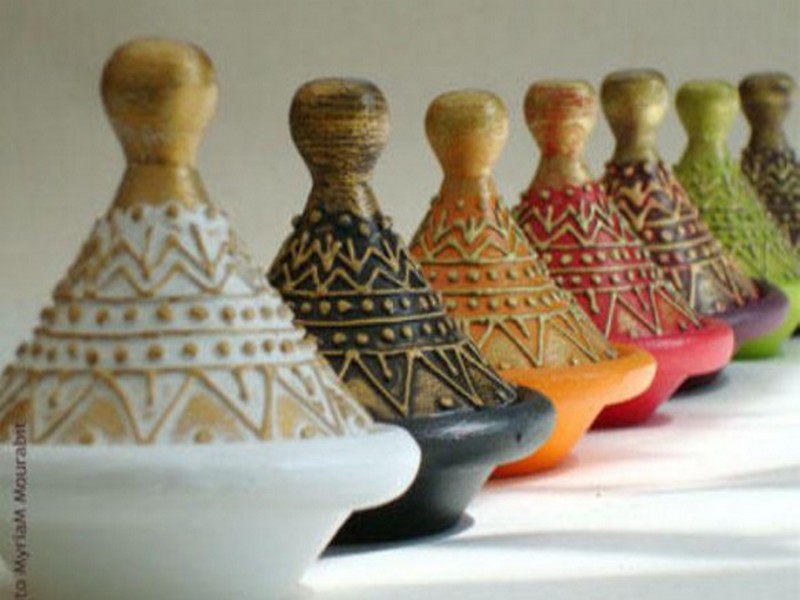
Convergence promotionnelle entre le tourisme et l’artisanat
Un projet de création et de promotion des circuits touristiques intégrant l’artisanat a été lancé à Fès et à Marrakech pour renforcer la complémentarité entre l
Savoir plus...
NOTE SUR LES CHANGEMENTS CLIMATIQUES RÉGION DE GUELMIM OUED-NOUN POUR LE PORTAIL DU CENTRE DE COMPÉTENCE CHANGEMENT CLIMATIQUE DU MAROC (4C) (Géoparc Jbel Bani)
NOTE SUR LES CHANGEMENTS CLIMATIQUES RÉGION DE GUELMIM OUED-NOUN POUR LE PORTAIL DU CENTRE DE COMPÉTENCE CHANGEMENT CLIMATIQUE DU MAROC (4C) (Géoparc Jbel Bani) CARACTÉRISATION DE LA RÉGION La r&
Savoir plus...
Recherche : Découverte inédite en géologie
- Le Mésoprotérozoïque était considéré comme période absente au Maroc - Un enseignant-chercheur marocain coordonne l’étude menée par une équipe internationale
Savoir plus...
Ce Maroc que les touristes connaissent mieux que nous ! (Géoparc Jbel Bani)
Ce Maroc que les touristes connaissent mieux que nous ! (Géoparc Jbel Bani) Au Maroc, il existe des destinations rarement mentionnées dans les guides touristiques et que seuls quelques initiés fréquentent.
Savoir plus...
Ahwach, la tradition amazighe (Géoparc Jbel Bani)
Ahwach, la tradition amazighe (Géoparc Jbel Bani) Ahwach représente l’une des grandes traditions de danses amazighes au Maroc. C’est un art purement rural, une danse collective mixte. Il est présent p
Savoir plus...
Etude : la taille des Marocains en stagnation depuis 1976
Etude : la taille des Marocains en stagnation depuis 1976 Une étude sur l’évolution de la taille des adultes durant le XXe siècle a vu le jour. Publiée lundi 25 juillet par la revue scientifique &laq
Savoir plus...
Disparition des dinosaures : quand les mammifères sortent au grand jour
Disparition des dinosaures : quand les mammifères sortent au grand jour Nos lointains ancêtres mammifères appréciaient la vie nocturne. Puis, certains d'entre eux au moins se sont aventurés dans
Savoir plus...
Visite hier de l’Agadir Inoumar
Visite hier de l’Agadir Inoumar Nous voulions faire découvrir à ma soeur Régine et à Georges un grenier fortifié de l’Anti-Atlas. Celui d’Imchguiguilne étant toujours fer
Savoir plus...
Le Goundi
Le Goundi est une espèce de petits rongeurs de la famille des Ctenodactylidae. C’est un rongeur et mammifère diurne qui habite les régions semi-désertiques de l’Afrique du Nord. Au Maroc on en
Savoir plus...
l’Initiative Royale pour le Développement de l’Oriental ou la dynamisation des patrimoines humains, culturels et naturels de la Région pour Taoufiq BOUDCHICHE
l’Initiative Royale pour le Développement de l’Oriental ou la dynamisation des patrimoines humains, culturels et naturels de la Région pour Taoufiq BOUDCHICHE Monsieur Taoufiq BOUDCHICHE &nb
Savoir plus...
Des chiens en laisse à la Préhistoire !
Des chiens en laisse à la Préhistoire ! Dans les scènes de chasse de deux sites d'art rupestre d'Arabie saoudite datant du prénéolithique, des dizaines de chiens sont gravés en compag
Savoir plus...Les tags en relation
En savoir plus sur " Géologie et TSGJB - AMDGJB ! "
Consulter les vidéos de " Géologie et TSGJB - AMDGJB ! " Consulter les photos de " Géologie et TSGJB - AMDGJB ! " Consulter les publications de " Géologie et TSGJB - AMDGJB ! " Consulter les éditions de " Géologie et TSGJB - AMDGJB ! " Consulter les communications de " Géologie et TSGJB - AMDGJB ! "Recherche du site
Recherche avancée / SpécifiqueVulgarisation à la géologie
Qu'est ce que les sciences de la terre: vulgarisation Qu'est ce que la géologie ? Géologie et TSGJB - AMDGJB !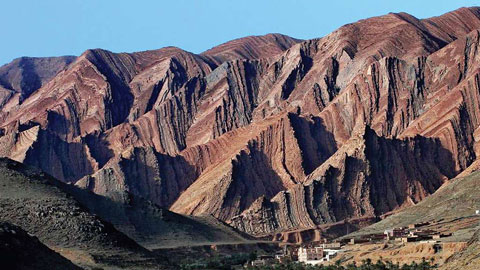
Géoparc et Recherche Scientifique
Le coins de l’étudiant
Blog Géoparc Jbel Bani
Dictionnaire scientifique
Plus de 123.000 mots scientifiques
Les publications
Géo parc Jbel Bani

Circuits & excursions touristiques
cartothéques
Photothéques
Publications & éditions