

A plate tectonic evolution of the Anti-Atlas on a global scale
DR.Hervé Rezeau, DR.Cyril Chelle-Michou & DR.Michael Calder
SEG Student Chapter of Geneva (Switzerland)
SEG Student Chapter of Montpellier (France)
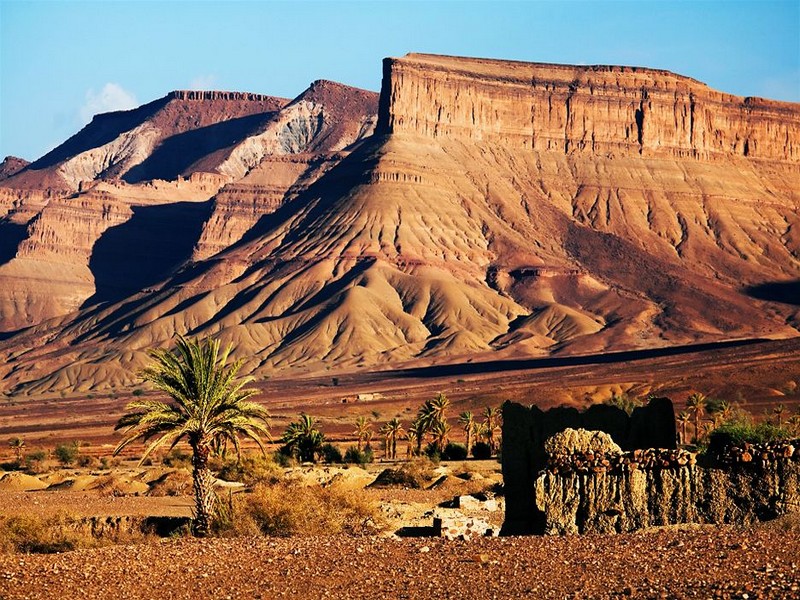
In the western Maghreb, the Variscan (Hercynian) belt extends into the Meseta and Atlas do- mains, being widely exposed in the large Paleozoic massifs of the Moroccan Western Meseta and West- ern High Atlas, whereas it forms smaller massifs in the Eastern Meseta, Middle Atlas and Central- Eastern High Atlas (Fig.1). Altogether, these massifs define the Meseta Domain, whose late Paleozoic evolution was accompanied by significant metamorphism and magmatic intrusions. This domain is also referred to as the Meseta Block (although it was not a single block until the end of the Variscan Orogeny) and corresponds to the southwesternmost segment of the Variscan belt of Europe. The Anti-Atlas belt extends south of the Meseta Domain and can be regarded as the common foreland fold belt of both the Mesetan Variscides and northernmost Mauritanides. The Anti-Atlas belt connects to the east with the coeval, intracontinental Ougarta belt that extends essentially into the Algerian territory (Fig.1).

Figure 1: Landsat image of Morocco (from Michard et al. 2008)
The tectonic evolution of the Anti-Atlas basin and fold belt in relation to plate tectonics on aglobal scale is illustrated in Fig. 2, and summarized below (Burkhard et al., 2006):
(1)During the Panafrican orogeny, a series of terranes are accreted to the West African craton on its northern and probably western side. While the northeastern suture (Bou Azzer) and terranes to the northeast will remain in place, northwestern and western borders are subsequently reactivated and a series of terranes or continental fragments will be ripped off again during the Palaeozoic. The southwestern Anti-Atlas, however, at the margin of the Saharan metacraton remains attached to Gondwana throughout its Palaeozoic history.
(2)In Late Proterozoic–Early Cambrian, the Anti-Atlas area is in extension with the formation of many widely distributed graben and halfgraben structures, filled in with coarse clasts mostly of igneous origin. The youngest volcanism is tholeiitic–alkaline and indicates an intracontinental setting. The geodynamic significance of this extensional event is not entirely clear, however. It could be related to a southeast dipping, major and longlived subduction zone on the northwestern margin of Gondwana, causing a wide area of extension cratonward in a basin and range style.
(3)From Middle Cambrian through Middle Carboniferous, the western Anti-Atlas basin is characterized by a strong and essentially linear subsidence trend, leading to the accumulation of more than 10 km of mostly fine-grained clastic sediments, shed into an epicontinental sea from the African craton. There is little evidence in this stratigraphic record for tectonic events postulated to have taken place along the active northwestern plate margin of Gondwana. The departure of Avalon, Armorica and Hunic terranes from this margin in successive events of back-arc spreading must have brought the Anti-Atlas Sea increasingly closer to the open ocean(s) (Rheic and Palaeo-Tethys). From Silurian times onward, the Anti-Atlas Basin could thus represent the passive margin of the Palaeo-Tethys ocean, but very little if any sediments of the more distal parts of this passive margin are preserved anywhere (with the possible exception of terrains west of Guelmin and near Tineghir).
(4)In Late Carboniferous–Permian (?) compression leads to an event of strong inversion and folding. Basement is uplifted and folded into huge antiformal culminations (boutonnières) which punctuate the southwestern Anti-Atlas fold belt. The structural relief of the basement culminations is in excess of 10 km; minimum estimates of total shortening are 15 to 25 km. The Anti-Atlas belt does not represent a classical frontal, thin-skinned foreland fold-and-thrust-belt of the Appalachian–Variscan orogen, however, but rather an intracratonic, thick-skinned basement inversion belt. Similar time-equivalent belts occur further east into the African craton (Ougarta, Ahnet), but no such structures are known on the American side of the Appalachian chain.

Figure. 2: Evolution of the Variscan segments of Morocco during the Paleozoic, after Burkhard et al. (2006), based on the paleogeographic maps of Stampfli & Borel (2002). The figure is modified according to G. Stampfli, personal comm., in litt. 2008. The Meseta block is considered as separated from Gondwana (Anti-Atlas) by a Devonian Ocean (“Paleo-Tethys”). Aval, Av: Avalonian terranes; Meg: Meguma; WA/NAC: West African/North American Craton. From Michard et al. (2008).
Source web: DR.Hervé Rezeau, DR.Cyril Chelle-Michou & DR.Michael Calder unige.ch
Les articles en relation
TRÉSOR DES PLANTES MÉDICINALES DU MAROC
TRÉSOR DES PLANTES MÉDICINALES DU MAROC Le Maroc dispose de [COULEUR-3] 4200 espèces de plantes sauvages [FIN-COULEUR], dont [COULEUR-3]800 espèces endémiques [FIN-COULEUR]. [COULEUR-3]600 &agrav
Savoir plus...
Cranberry
Cranberry Plante originaire du nord-est de l'Amérique, le cranberry - aussi connu sous le nom de canneberge - est depuis longtemps reconnu comme un « fruit santé ». Il regorgerait de nombreuses substance
Savoir plus...
Berbère Culture et Histoire
Berbère Culture et Histoire Les Berbères sont le peuple autochtone d’Afrique du Nord qui ont habité la côte de la terre de l’Egypte au Maroc, au moins 5.000 ans. Depuis l’invasion arabe
Savoir plus...
BIOCLIMATS et MILIEU PHYSIQUE (jbel Lkest )
BIOCLIMATS et MILIEU PHYSIQUE (jbel Lkest ) Caractéristique bioclimatique : - Inframéditeraranéen aride semi-aride tempéré au piémont - Thermoméditeranéen semi-aride. -
Savoir plus...
Le patrimoine culturel marocain
Le patrimoine culturel marocain Titre Le patrimoine culturel marocain Le Maroc dispose d'un patrimoine culturel et civilisationel riche et diversifié. Chaque région possède ses particularités, contr
Savoir plus...
Que voir à Tan-Tan, DÉSERT DE TAN-TAN (Géoparc Jbel Bani)
Que voir à Tan-Tan, DÉSERT DE TAN-TAN (Géoparc Jbel Bani) Avant poste saharien, ce sont deux dromadaires blancs, gigantesques, qui accueillent le visiteur à l’entrée de la ville… D&e
Savoir plus...
Les conséquences du réchauffement climatique
Les conséquences du réchauffement climatique Les experts prévoient que le changement climatique en cours résultant des activités humaines aura quelques conséquences que l'on peut qualifie
Savoir plus...
De la patrimonialisation : son étendue et ses acteurs pour Professeur Ahmed SKOUnTI
De la patrimonialisation : son étendue et ses acteurs pour Professeur Ahmed SKOUnTI Professeur Ahmed SKOUnTI, Anthropologue, Institut national des Sciences de l’Archéologie et du Patrimoine ,Rabat-Marrakech De
Savoir plus...
Des trésors archéologiques marocains pillés
Des trésors archéologiques marocains pillés Kiosque360. La mafia des trésors archéologiques est un engrenage bien huilé qui n'agit pas de manière fortuite. Des scientifiques seraie
Savoir plus...
Le festival des fiançailles d’Imilchil: Mariage et folklore
Le festival des fiançailles d’Imilchil: Mariage et folklore Dans le Haut-Atlas Oriental, le village d’Imilchil organise chaque année au mois de Septembre un festival où des centaines de jeunes filles
Savoir plus...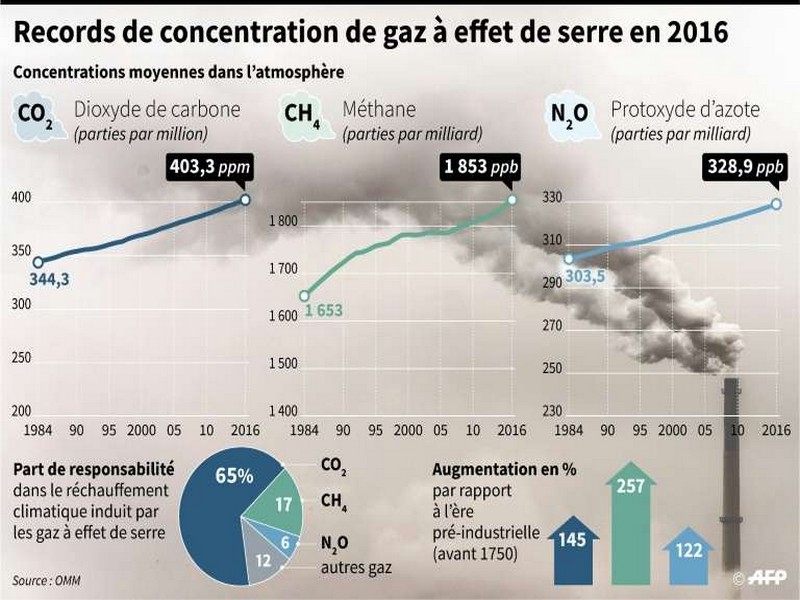
COP 23 : où en est l'accord de Paris ?
COP 23 : où en est l'accord de Paris ? À Bonn, en Allemagne, vient de s'ouvrir la « Conférence des parties » numéro 23, avec les États-Unis en vedette surréaliste, pr&eacu
Savoir plus...
Pluviométrie: le Maroc se dirige-t-il vers une année agricole blanche?
Pluviométrie: le Maroc se dirige-t-il vers une année agricole blanche? Se dirige-t-on vers «une année agricole blanche»? Dans son édition de ce vendredi 24 novembre, L’Économiste
Savoir plus...Les tags en relation
En savoir plus sur " Géologie et TSGJB - AMDGJB "
Consulter les vidéos de " Géologie et TSGJB - AMDGJB " Consulter les photos de " Géologie et TSGJB - AMDGJB " Consulter les publications de " Géologie et TSGJB - AMDGJB " Consulter les éditions de " Géologie et TSGJB - AMDGJB " Consulter les communications de " Géologie et TSGJB - AMDGJB "Recherche du site
Recherche avancée / Spécifique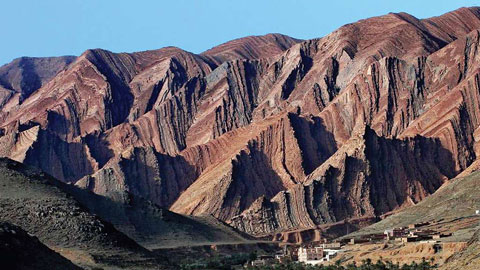
Géoparc et Recherche Scientifique
Le coins de l’étudiant

Blog Géoparc Jbel Bani
Dictionnaire scientifique
Plus de 123.000 mots scientifiques
Les publications
Géo parc Jbel Bani

Circuits & excursions touristiques
cartothéques
Photothéques
Publications & éditions