

A short overview of the Anti-Atlas, Morocco
DR.Hervé Rezeau, DR.Cyril Chelle-Michou & DR.Michael Calder
SEG Student Chapter of Geneva (Switzerland)
SEG Student Chapter of Montpellier (France)
INTRODUCTION
Geology of Morocco has been subdivided into four structural domains, from north to south they are the following: the Rif domain, the Meseta domain, the High Atlas, and the Anti-Atlas, as they are shown in (Figure 1).
The Rif Range extends along the Mediterranean coast from the Kabylian-Tellian belts up to the Strait of Gibraltar. South of it, the Meseta domain is located, where elevated plateaus and intramontane basins occur. Further south the High Atlas system is found, which displays several massifs close to 4000 m, including the highest peak of northern Africa (Jebel Toubkal). The Middle Atlas represents a branch of the Atlas system that extends obliquely across the Meseta domain, and exceeds 3000 m in elevation. Finally, the Anti-Atlas domain is found, which rises forming a massive mountain that achieves up to 2700 m. Further south the elevation decreases both southward and westward from ca. 1000 m to less than 200 m close to the Atlantic.

Figure 1: Elevation map of Morocco and neighbouring countries from GTOPO30 database (A. Michard et al. 2008)
GEOLOGICAL SETTING OF THE ANTI-ATLAS
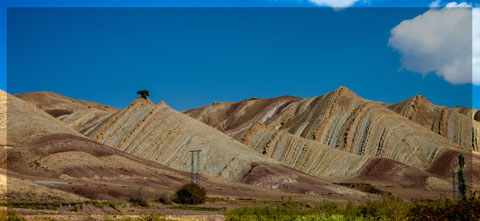
The Anti-Atlas mountain belt is located in the northern part of the West African Craton (WAC). It is stretching NE-SW and is characterized by Precambrian to late Proterozoic rocks covered by younger sediments of Edicaran to Cambrian in age. The geological boundary between the Anti-Atlas and High Atlas is structurally marked by the South Atlas fault (SAF) (Fig.2). The Anti-Atlas massif is a zone of wide domal uplift with much weaker Alpine age deformation. The volcanics and conglomerates rocks from the Ouarzazate & Bou Salda group in the North-East are surrounding the older volcanics rocks
The Anti-Atlas mountain belt is located in the northern part of the West African Craton (WAC). It is stretching NE-SW and is characterized by Precambrian to late Proterozoic rocks covered by younger sediments of Edicaran to Cambrian in age. The geological boundary between the Anti-Atlas and High Atlas is structurally marked by the South Atlas fault (SAF) (Fig.2). The Anti-Atlas massif is a zone of wide domal uplift with much weaker Alpine age deformation. The volcanics and conglomerates rocks from the Ouarzazate & Bou Salda group in the North-East are surrounding the older volcanics rocks and turbidite sequences from the Sahgro Group and the Pan-African granite intrusions. This geomorphological feature is commonly called inliers (“boutonnière” in French) and is the result of an exposed older rock formation surrounded by younger rock, and is due to a high erosion rate of rocks with different hardness but also encouraged by deformation such as folding and faulting (Gasquet et al. 2005). Several slivers of ophiolites are present in the Anti-Atlas belt, the best preserved are situated in the Bou Azzer, Siroua and Iriri region, which represent remnant of an ocean closure. The basement is composed of schists, granites and mylonites of Paleoproterozoic age. The latest Variscan and Alpine orogenic events overprint most of the Anti-Atlas geological province and thus complicate the Pre- Cambrian geodynamic interpretation. However, two main periods of tectono-thermal magmatic activity (Gasquet et al. 2005) are now recognised :
(i)A Palaeoproterozoic period, corresponding to the Eburnean (Birimian) orogeny,
(ii)A Neoproterozoic period, corresponding to the Pan-African orogeny.

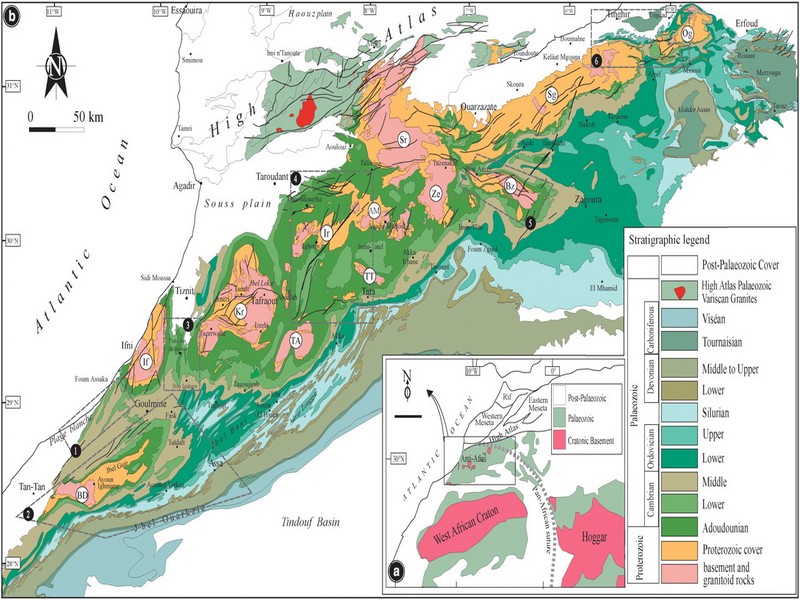
Figure 2: Schematic map of the Anti-Atlas Precambrian inliers (Boutonnière), and location of the maps, satellite views and lithospheric profile presented hereafter (Gasquet et al. 2008)
Source web : DR.Hervé Rezeau, DR.Cyril Chelle-Michou & DR.Michael Calder unige.ch
Les articles en relation
Le Sahara marocain
Le Sahara marocain Terre aride et inhospitalière, le Sahara marocain n’en reste pas moins d’une importance centrale dans l’histoire des civilisations au Maroc. Depuis le onzième millénaire avant
Savoir plus...
Accipitridae
Accipitridae La famille des accipitridés (Accipitridae) rassemble la majorité des rapaces diurnes : bazas, milans, bondrées, élanions, pygargues, palmistes, gypaètes, vautours, circaètes, bat
Savoir plus...
Plantes d’intérieur : conseils et astuces pour l'entretien
Plantes d’intérieur : conseils et astuces pour l'entretien Un intérieur verdoyant et agrémenté de fleurs, c'est agréable. Mais maintenir ses plantes vertes en vie est parfois dé
Savoir plus...
Tata / Tissint : Une oasis paradisiaque qui vaut le détour !
Tata / Tissint : Une oasis paradisiaque qui vaut le détour ! Outre la beauté des paysages de ses oasis, le village de Tissint, province de Tata, est aussi célèbre pour ses magnifiques cascades d’eau
Savoir plus...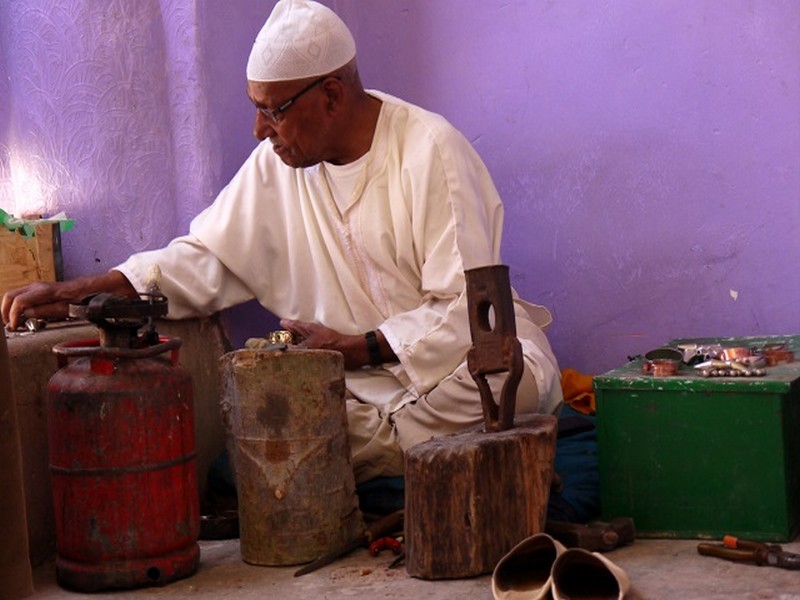
Artisanat : Les artisans marocains
Indifférents au temps qui passe, les artisans du sud Maroc ont de tout temps joué un rôle prépondérant dans le quotidien des populations berbères. Au départ essentiellement domestique,
Savoir plus...
Cannabis médical : cette « mousse » serait plus efficace que le THC
Cannabis médical : cette « mousse » serait plus efficace que le THC À faible dose, le THC présente un important potentiel thérapeutique. Pourtant, il reste peu utilisé compte tenu des ef
Savoir plus...
La gerboise du désert
La gerboise du désert « La gerboise du désert est un rongeur aux longues pattes postérieures dotées de trois doigts lui permettant de faire des bonds de plus de 3 m. Les gerboises fouissen
Savoir plus...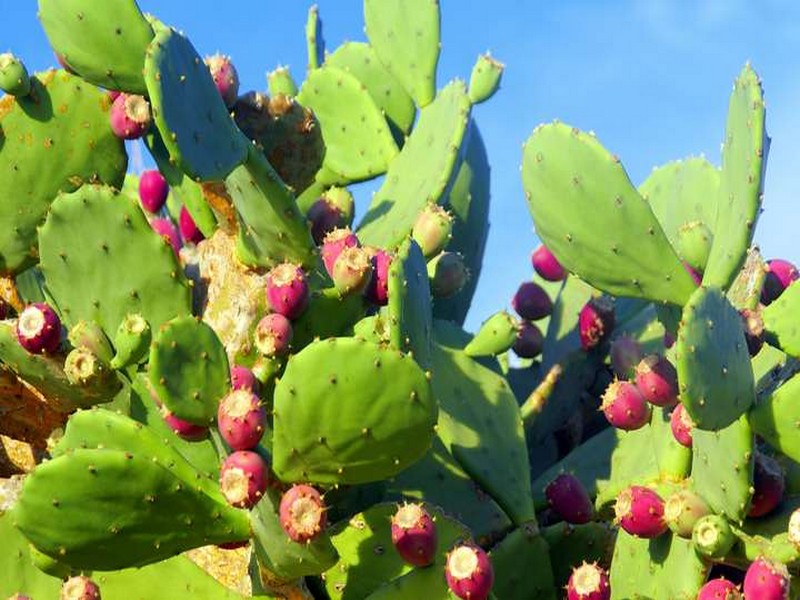
Nopal
Nopal Le nopal est une plante grasse, arborescente, de la famille des cactus. Originaire du Mexique (elle figure sur le drapeau du pays), elle s'est acclimatée sur tout le pourtour de la Méditerranée. Sa tige
Savoir plus...
Sur la vague du nouveau Maroc
Sur la vague du nouveau Maroc Mettre le pied une deuxième fois sur le sol marocain répondait pour nous cinq à une soif de mieux connaître ce pays qui nous hante et nous attire avec ses mille couleurs, ses s
Savoir plus...
Anti-Atlas: Un PPP pour le «Géoparc» Jbel Bani (Géoparc Jbel Bani)
Anti-Atlas: Un PPP pour le «Géoparc» Jbel Bani (Géoparc Jbel Bani) Le Géoparc Jbel Bani. L’idée de ce projet a démarré d’une rencontre publ
Savoir plus...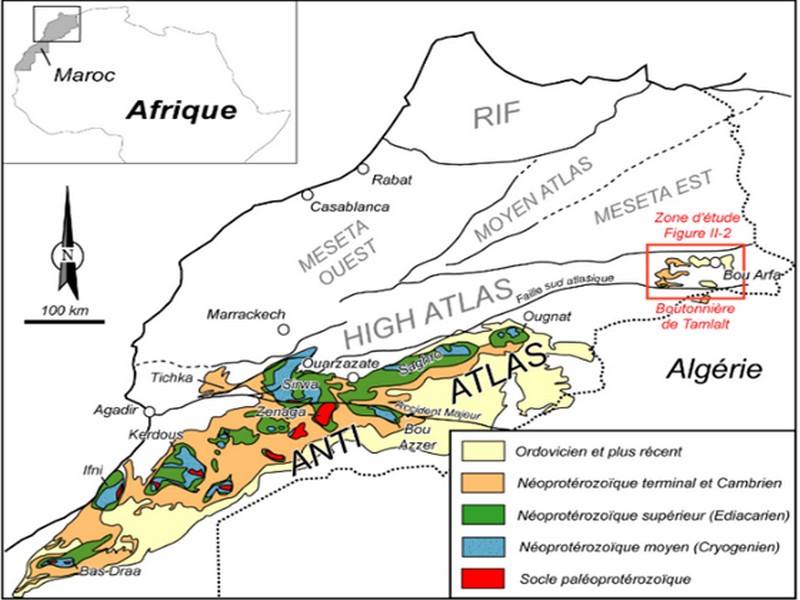
L’Anti-Atlas marocain
L’Anti-Atlas marocain L’Anti-Atlas marocain constitue le domaine structural majeur du Sud du Maroc (Figure I-3). Il s’agit d&rs
Savoir plus...Les tags en relation
En savoir plus sur " Géologie et TSGJB - AMDGJB "
Consulter les vidéos de " Géologie et TSGJB - AMDGJB " Consulter les photos de " Géologie et TSGJB - AMDGJB " Consulter les publications de " Géologie et TSGJB - AMDGJB " Consulter les éditions de " Géologie et TSGJB - AMDGJB " Consulter les communications de " Géologie et TSGJB - AMDGJB "Recherche du site
Recherche avancée / Spécifique
Géoparc et Recherche Scientifique
Le coins de l’étudiant

Blog Géoparc Jbel Bani
Dictionnaire scientifique
Plus de 123.000 mots scientifiques
Les publications
Géo parc Jbel Bani

Circuits & excursions touristiques
cartothéques
Photothéques
Publications & éditions